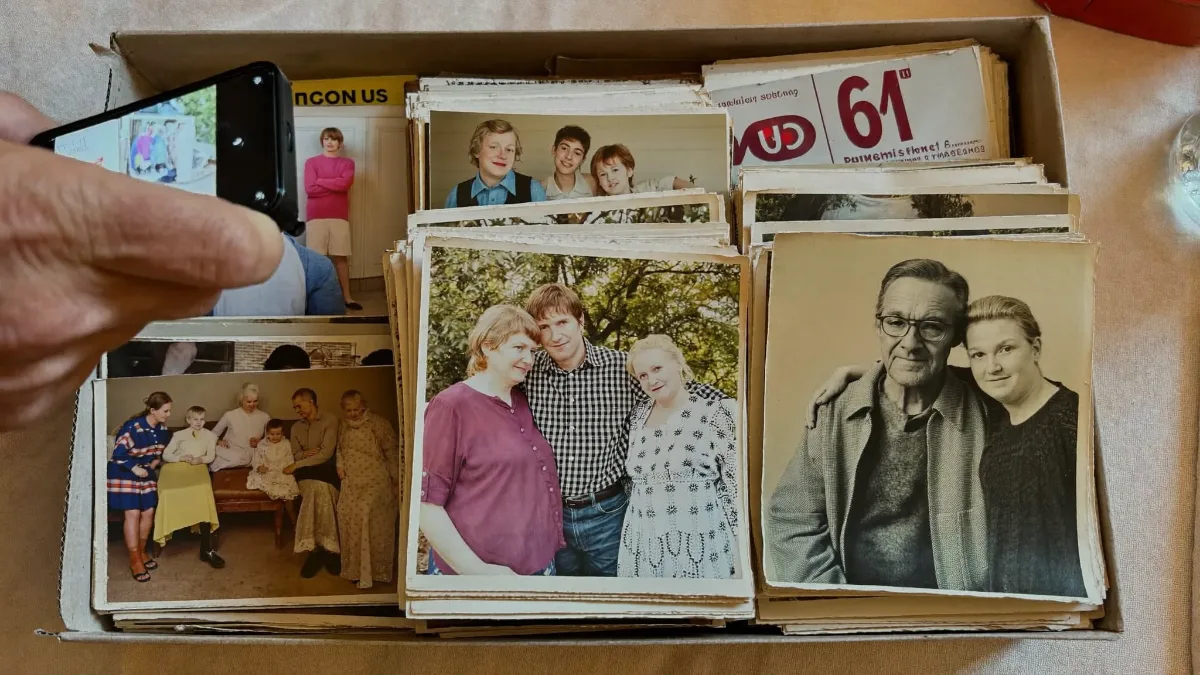
Almost every family has the same three things. A shoebox of loose prints, a shelf of albums, and a vague worry that nobody has done anything about them. Prints fade, lofts get damp, and the one person who knows who everyone in the photographs is will not be around forever.
Digitising the lot sounds like a mountain. Treated as a winter project, twenty minutes at a time, it is entirely manageable.
Start by sorting, not scanning
Resist the urge to scan the first photograph you pick up. Spend the first few sessions sorting into three piles. The keepers, the duplicates and the mysteries. Be ruthless with the seventeen nearly identical shots of the same beach. Aim to digitise the best few hundred, not all five thousand.
The mysteries pile is the valuable one. Sit down with the oldest member of the family and go through it together, writing names and places lightly in pencil on the back. That conversation is often the best part of the whole project, and the information is irreplaceable.
Three ways to scan, from free to effortless
- Your phone, with a scanning app. Free scanning apps use the phone camera, straighten the image and remove glare. Quality is genuinely good for prints, and it is the easiest way to share photographs with family straight away.
- A flatbed scanner. Better quality, especially for older or damaged prints. Scan at 600 dpi for prints you may want reprinted. Many libraries have scanners you can use for free.
- A scanning service. For slides, negatives and very large collections, a professional service is worth the money. They post back the originals with a disc or memory stick. Use a reputable firm and send irreplaceable items in batches rather than all at once.
Name the files while you remember
A folder called "Scans 1" with four hundred numbered files helps nobody. Name folders by decade or event, and put names in the file name itself where you can. Your grandchildren will not recognise great aunt Edith without help.
Finally, share as you go. A photograph from 1972, sent to the family group chat on a Sunday evening, reliably produces more conversation than anything else you will send all week.