If your GP or practice nurse has started asking whether you have had any falls, or whether you feel steady on your feet, there is a good reason. Around one in three people over 65 has a fall each year, and falls are the single biggest reason older people lose their independence.
The encouraging part is that balance is not something you simply lose with age. It is closer to a muscle. It fades when it is not used, and it responds remarkably quickly when it is.
Why balance fades quietly
Most of us stop doing the things that train balance without noticing. We hold the rail. We sit down to put socks on. We stop walking on uneven ground. Each adjustment is sensible on its own, but together they mean the balance system gets less practice every year, exactly when it needs more.
The five minute habit
Physiotherapists who work with older patients tend to recommend the same small set of habits, done little and often rather than in long sessions:
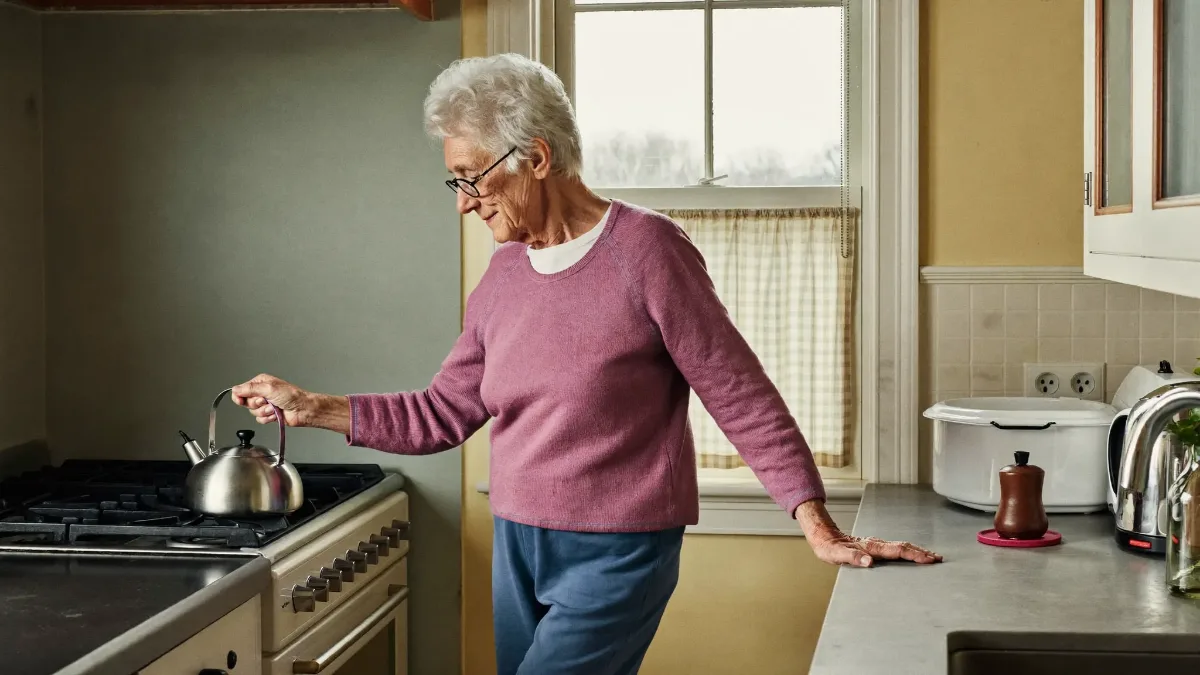
- Stand on one leg while the kettle boils. Hold the worktop lightly at first. Aim for ten seconds each side, building up over weeks.
- Sit to stand from a chair without using your hands. Five repetitions, once or twice a day. This builds the thigh strength that catches you when you trip.
- Heel to toe walking along the hallway. As if walking a tightrope, with a hand near the wall.
None of this needs equipment, and the kitchen worktop is safer than any gadget. The key is consistency. Five minutes a day beats an hour once a fortnight.
When to mention it to your GP
Tell your GP if you have fallen in the past year, even if nothing was hurt, or if you have started feeling dizzy when you stand up. Both are easy to dismiss and both are worth a proper look, because the causes are often simple to fix. A medication review alone solves more balance problems than most people would guess.